
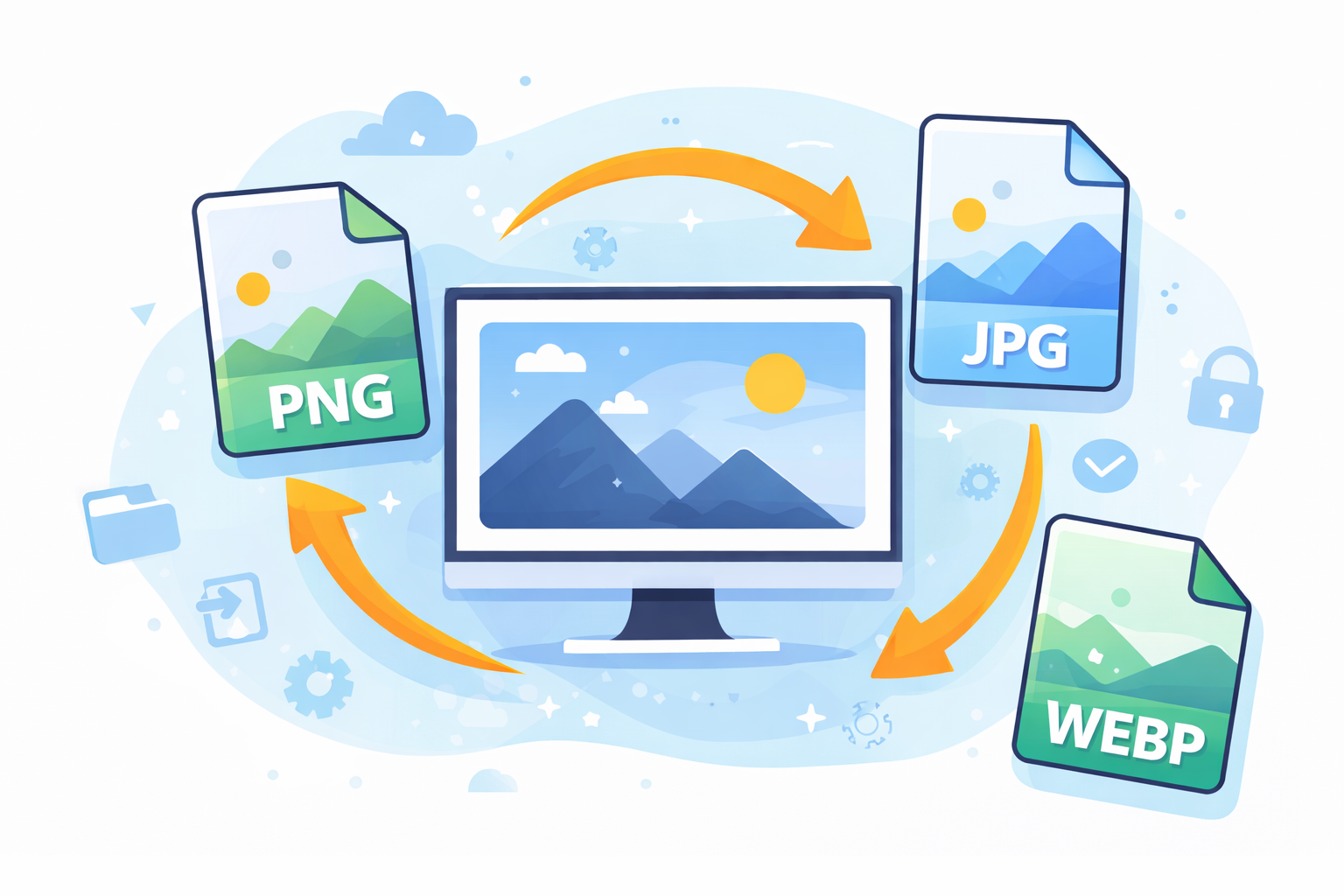
In the modern world of digital technology images play an important part in the social web, advertising materials as well as professional design. Understanding how to convert images to high-quality formats online will make a major impact on the visual appearance web performance, site performance, and compatibility with files.
If you’re a designer, blogger photographer, blogger or a business owner changing images into the appropriate format will ensure your images stay professional and sharp. They are also optimized for various platforms.
Many online tools let users convert images swiftly without the need for software. If you use the correct techniques and equipment, users will be able to preserve image quality while decreasing the size of your files and enhancing compatibility.
Understanding Image Formats and Why Conversion Matters
Images’ formats dictate how images are displayed, stored and compressed. Different formats are used for different purposes so choosing the appropriate one will affect both the quality and accessibility.
Common Image Formats Explained
we’re here to help you grow stronger mentally and emotionally. are a few of the most popular formats for images:
| Format | Best Use | Quality Level |
|---|---|---|
| JPEG/JPG | Images from the Web and photography | Medium-High |
| PNG | Transparent backgrounds | High |
| WEBP | Web optimization | High |
| TIFF | Professional editing | Very High |
| GIF | Simple animations | Low-Medium |
Each format has its own strengths. For example, JPEG is excellent for photographs, whereas PNG keeps clarity and sharp details.
Why Image Quality Changes During Conversion
When you convert images, the quality can decrease due to compression. A lot of formats employ compressing lossily which eliminates information to shrink the size of files.
If the settings for conversion aren’t properly optimized, this could lead to:
-
Images in a blur
-
Pixelation
-
Color distortion
-
Resolutions are reduced
Setting up high-quality settings with appropriate formats will help prevent these problems.
Benefits of Converting Images to High-Quality Formats
The understanding of how to convert images to High-Quality Formats online provides a number of benefits.
Improved Visual Quality
High-quality image formats ensure:
-
Color depth
-
Sharpness
-
Fine details
This is crucial for graphic designers, photographers and other marketers who rely on professional graphics.
Better Compatibility Across Platforms
Different platforms support different formats.
For instance:
-
Websites usually make use of JPEG or WEBP. JPEG
-
Designers favor TIFF or PNG for their designs.
-
Social media platforms prefer JPEG
Image conversion allows files to work smoothly across all devices and programs.
Optimized Storage and File Size
High-quality formats are able to keep reasonable file sizes when properly optimized. This can improve the balance
-
Storage efficiency
-
Website loading speed
-
User experience
Best High-Quality Image Formats to Use
The right format selection is vital to maintain the clarity of images.
PNG Format Advantages
The PNG (Portable Network Graphics) offers lossless compression which means that the image’s data will not be lost while saving.
Benefits include:
-
Crystal-clear quality
-
Support for transparency
-
Great for logos and graphics
But, PNG files can be larger than JPEG images.
JPEG vs JPG Explained
JPEG JPEG and JPG are basically the identical formats. The distinction is due to the fact that the earliest Windows operating systems needed three-letter extensions to file extensions.
The key features are:
-
Good compression
-
Small size file
-
Ideal for photography
However, editing over and over again and saving may reduce the image quality.
WEBP for Modern Web Optimization
WEBP is a new image format created by Google.
Benefits include:
-
Smaller file sizes
-
High quality visuals
-
Faster website loading
Modern websites are increasingly using WEBP images to optimize performance.
You can learn more about WEBP through Google’s official documentation:
https://developers.google.com/speed/webp
TIFF for Professional Editing
TIFF (Tagged Image File Format) is used extensively for professionally-produced photography as well as publishing.
Benefits include:
-
Very high-end
-
No compression loss
-
Great for printing and editing
The drawback is the file’s size.
How to Convert Images to High-Quality Formats Online (Step-by-Step Guide)
The process of learning how to convert images to high-quality formats online is easy if you follow the right procedure.
Step 1: Choose the Right Conversion Tool
Select a reliable online converter. A good tool will provide:
-
Multiple formats to choose from
-
Quality settings
-
Secure file handling
Examples include CloudConvert Convertio and Online-Convert.
Step 2: Upload Your Image
The majority of software allows drag-and-drop uploads.
The input formats that are supported typically comprise:
-
PNG
-
JPEG
-
TIFF
-
BMP
-
WEBP
Check that your original photo has high resolution prior to the conversion.
Step 3: Select the Desired High-Quality Format
Select the best format that matches your needs.
Examples:
-
PNG is a transparent graphic format that can be used for graphics.
-
JPEG to use for photography
-
WEBP for websites
-
TIFF to edit
Step 4: Adjust Quality Settings
A number of converters let users manage:
-
Compression level
-
Resolution
-
DPI settings
-
Image size
For the best results, choose the highest quality or minimum compression.
Step 5: Download the Converted File
Once processed, you can download the transformed image onto your device.
Always look over the final image before you print it to ensure:
-
Colors are accurate
-
Resolution is maintained
-
Size of the file is based on your requirements
Best Online Tools for Image Conversion
A variety of powerful platforms enable users to convert images in a matter of minutes.
CloudConvert
CloudConvert can handle over 200 formats for files which includes a variety of types of images.
Features:
-
Conversions of high-quality
-
Custom compression settings
-
Secure file handling
Convertio
Convertio is among the most well-known online converters for images.
Benefits include:
-
Cloud-based conversion
-
Simple interface
-
Processing speed is rapid
Online-Convert
Online-Convert offers advanced settings for professionals.
The features include:
-
Adjusting DPI
-
Color enhancement
-
Optimization of files
Canva Image Converter
Canva lets users export their designs in a variety of formats.
Benefits include:
-
User-friendly interface for beginners
-
Quick format switching
-
Design tools integrated into the design process
Tips to Maintain High Image Quality During Conversion
When you convert images, minor changes can make a huge impact.
Avoid Multiple Conversions
Repeated conversions can degrade image quality.
Always convert to original file whenever possible. initial file whenever it is possible.
Use Lossless Formats
Lossless formats such as PNG or TIFF protect the image’s data and stop degradation.
They are ideal for editing and archive.
Adjust Compression Settings
Compression reduces file size however it can affect the quality.
Select the low-compression or high quality settings when you convert important images.
Common Mistakes When Converting Images
Many users are unaware of the reduction in the image quality when they convert.
Choosing the Wrong File Format
A format that is not correct can result in:
-
Poor image quality
-
Larger file sizes
-
Compatibility issues
Excessive Compression
Over-compression erases image data and can cause:
-
Bright visuals
-
Artifacts
-
The loss of details
Ignoring Resolution Settings
Resolution plays a major role in image quality.
For web-based use, 72-150 DPI is typically sufficient.
Printing, 300 DPI is the recommended resolution.
Image Conversion for SEO and Web Performance
Image optimization plays an important part in the performance of websites and search ranking.
Faster Website Loading
Optimized image formats can reduce the size of pages and increase loading speeds.
Search engines favor websites that are fast and this can boost rankings.
Optimized Images for Search Engines
Correctly formatted images boost SEO when paired with:
-
Names of descriptive files
-
Alt text
-
Correct compression
These elements help search engines to understand the content of images.
FAQs About How to Convert Images to High-Quality Formats Online
1. What is the most suitable format for images with high-quality?
PNG as well as TIFF are considered to be the most effective formats to preserve excellent image quality since they employ lossless compression.
2. Can online converters reduce image quality?
Yes, if the compression settings are excessively high. Always use high-quality output settings.
3. Is WEBP superior to JPEG?
WEBP typically has smaller file sizes but providing the same or superior quality, which makes it perfect for web pages.
4. Are online image converters safe?
Most reliable tools will delete uploaded files immediately following conversion. But, be careful not to upload sensitive images.
5. How do I convert images with no loss of quality?
Choose lossless formats such as PNG or TIFF, and select low compression settings.
6. What resolution should images be for web pages?
The majority of websites work very well with images ranging from between 72 or 150 DPI dependent on your design needs.
Conclusion
Understanding how to convert images to high-quality formats online is crucial to ensure professional-looking images on websites social media, websites, and other digital platforms. When you select the appropriate format, changing the compression settings and using efficient tools to convert images it is possible to maintain the quality of your images while maximizing the size of your file.
Images of high-quality improve the user experience, enhance branding, and improve the performance of websites. If you’re working with photos or graphics, or even marketing graphics mastering the art of image conversion will allow you to create clarity, clarity and more effective digital content.