
Introduction to How to Convert Images for Digital Projects
In the modern digital world images play a significant part in web pages as well as social media, mobile apps, presentations as well as marketing material. However the direct use of images from the camera or downloaded off the Internet frequently results in compatibility issues or slow loading speeds or poor image quality.
This is why knowing how to convert images to Digital Projects will be an important ability for developers, designers and marketers, as well as students and creators of content.
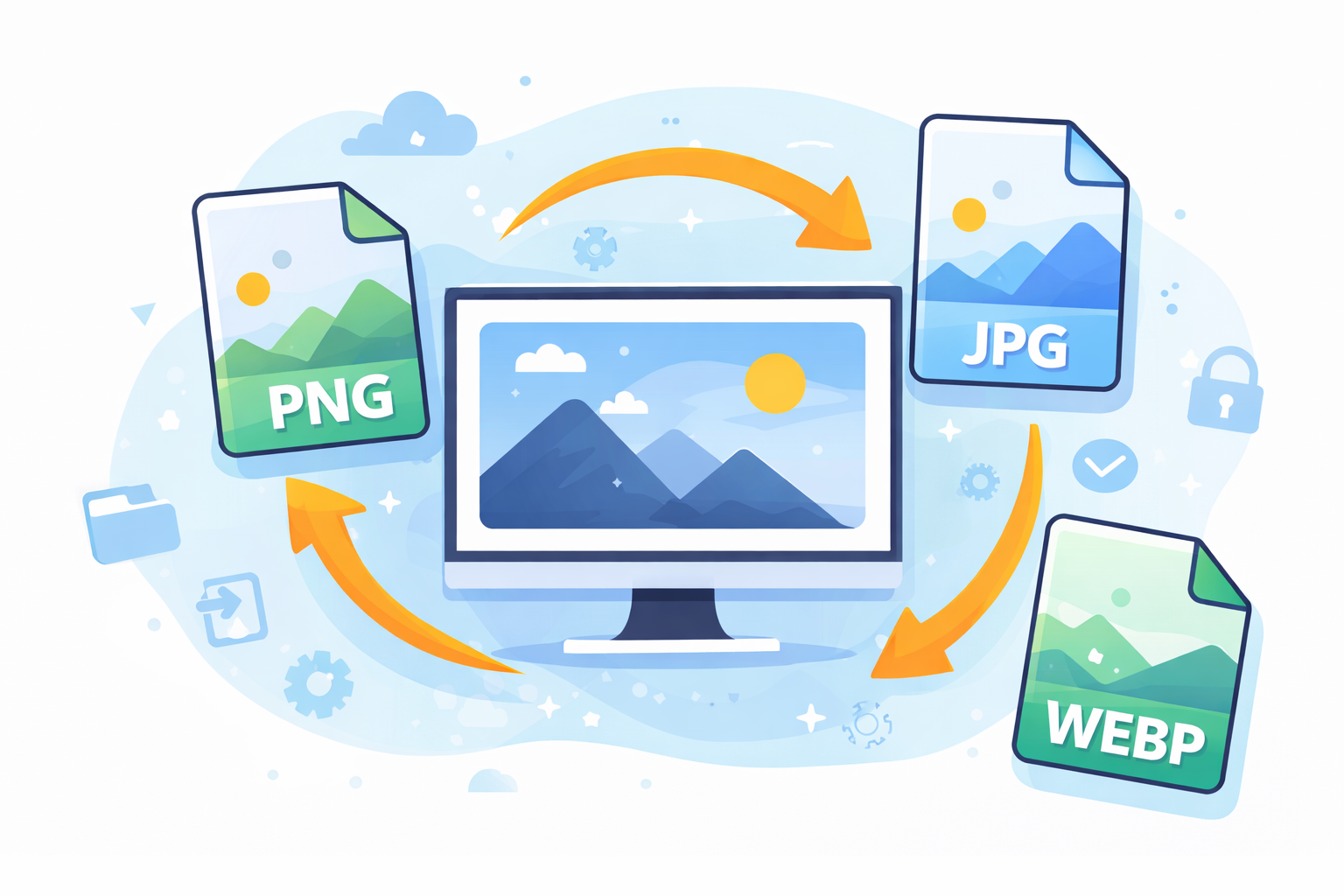
Image conversion refers to changing the image’s format to another format. For instance, changing the PNG file into JPG or converting the high-resolution TIFF into a more web-friendly WebP format.
When images are correctly converted after conversion, they will be:
- Speedier loading
- Compatible with various platforms
- Optimized for storage
- It is easier to edit and easier to share and edit
If images are not properly converted, they may slow down websites, decrease quality, or be unable to display on specific platforms.
In this article we’ll go over all you must learn about how to convert images to Digital Projects that includes the formats of files, tools that work best, the most efficient techniques, optimization strategies and the most common mistakes to avoid.
Understanding Image File Formats
Before you convert images, it is essential to know the most popular formats for digital projects.
Each format has a distinct function based on the quality of the format, its compression capabilities, and its the need for transparency.
JPEG (JPG)
JPEG is among the most popular images formats available on the internet.
Key Features
- Small size file
- Great for photos
- Supports compression
- Widely compatible
Best Uses
- Websites
- Images from social media
- Blog graphics
- Online portfolios
But, JPEG uses lossy compression this means that certain image quality may be reduced in the process of conversion.
PNG
PNG files are ideal for images where quality and clarity are essential.
Key Features
- Compression that is lossless
- Background support that is transparent
- High image quality
Best Uses
- Logos
- Icons
- Textual images with graphics
- Interface elements
PNG files are generally larger than JPEG however they offer better details.
GIF
GIF images are frequently employed for animations and basic graphics.
Key Features
- Animation support
- Limited color palette
- Small file sizes
Best Uses
- Animations of short duration
- Memes
- UX elements
The problem is that GIF doesn’t work for photos of top quality.
WebP
WebP is a new format created by Google which combines high quality with smaller files.
Advantages
- More compression than JPEG
- Provides transparency, similar to PNG.
- Supports animation similar to GIF
Best Uses
- Websites
- Mobile applications
- Optimization of performance
Learn more about WebP in Google’s web page of the official Google documentation:
https://developers.google.com/speed/webp
Why Image Conversion Is Important for Digital Projects
Image conversion doesn’t only concern changing formats. It directly impacts usability, performance and the quality of design.
Improved Website Speed
Large images can slow websites dramatically.
Converting images to optimized formats, such as WebP or JPEGs compressed, the loading times of pages are dramatically reduced.
This can help in:
- User experience
- SEO rankings
- Mobile performance
Better Compatibility Across Platforms
Different platforms support different image formats.
For instance:
| Platform | Recommended Format |
|---|---|
| Websites | WebP / JPEG |
| TIFF / PNG | |
| Social Media | JPEG / PNG |
| Mobile Apps | PNG / WebP |
Converting images guarantees that they will are displayed correctly across all devices.
Reduced Storage Space
Images with high resolution consume a lot of storage.
Image converters compress files with an acceptable quality, thus reducing storage use.
Improved Design Flexibility
Designers typically require images that have clear backgrounds or certain resolutions.
Converting images enables designers to modify visuals to:
- Websites
- Apps
- Marketing materials
- Presentations
Step-by-Step Guide: How to Convert Images for Digital Projects
The process of learning how to convert images to Digital Projects is simple by following an easy process.
Step 1: Choose the Right File Format
Before you do that, decide on your ultimate use case.
You can ask yourself:
- The image will be used on the internet?
- Do you think it is necessary to make transparent?
- Does animation need to be done?
Select the appropriate format.
Step 2: Use Image Conversion Software
It is possible to convert images with numerous tools.
The most popular options are:
Desktop Tools
- Adobe Photoshop
- GIMP
- Paint.NET
Online Tools
- CloudConvert
- Convertio
- TinyPNG
Mobile Apps
- Image Converter
- Snapseed
Online tools are especially helpful for quick conversions without installing any software.
Step 3: Adjust Image Resolution
Resolution determines image clarity.
The most common digital resolutions are:
| Use Case | Recommended Resolution |
|---|---|
| Website | 72 DPI |
| 300 DPI | |
| Social Media | 1080px width |
The reduction in resolution can drastically reduce the size of files.
Step 4: Optimize Compression Settings
Compression decreases the size of files.
There are two kinds:
Lossy Compression
- Smaller files
- Slight quality reduction
Lossless Compression
- Maintains quality
- Larger file size
Decide on compression based on the needs of the project.
Step 5: Export and Save the Image
Then you can export the image to the format you prefer.
Always check:
- Size of the file
- Image quality
- Compatibility
After exporting, you can test your image in the application it is going to be utilized.
Best Tools to Convert Images for Digital Projects
A variety of tools make it easier to convert images.
Adobe Photoshop
A very efficient image editing tools that are available.
The highlights include:
- Conversion of formats
- Advanced compression
- Processing in batches
- Color profile management
The problem is that Photoshop needs a paid subscription.
GIMP
GIMP is a no-cost option to Photoshop.
Benefits include:
- Open-source
- Supports a variety formats
- Advanced editing tools
It’s great for both beginners as well as professionals.
Online Image Converters
Online tools are quick and simple.
The most popular options are:
- TinyPNG
- Convertio
- CloudConvert
Benefits include:
- No installation required
- Rapid processing
- Supports a variety of formats
However, uploading images that are sensitive online could create privacy concerns.
Common Mistakes When Converting Images
A lot of people make errors when they convert images.
Beware of these mistakes to ensure the efficiency and quality.
Using the Wrong Format
For instance:
- Making use of PNG images for large photos
- Utilizing JPEG to make transparent images
Always ensure that the format is in line with the usage case.
Over-Compression
A lot of compression can lead to:
- Pixelation
- Images with blurred edges
- The loss of details
Make sure you balance file size and the image quality.
Ignoring Image Dimensions
images that’re too big can cause slowdowns on websites.
Resize images prior to uploading them.
Not Checking Color Profiles
Different devices display colors differently.
Always make sure to convert images using that the sRGB color profiles for use on websites.
Advanced Tips for Image Conversion
Professionals typically employ advanced techniques to get better results.
Batch Conversion
In lieu of changing images one at one at a time, batch conversion lets the processing of multiple images at the same time.
This helps save time when working on large projects.
Using WebP for Websites
WebP images are now the standard for modern websites.
Benefits include:
- Smaller files
- Faster loading
- High quality visuals
Many of the content management systems currently are able to support WebP automatically.
Automating Image Optimization
Developers typically make use of automated tools such as:
- ImageMagick
- Squoosh
- Sharp (Node.js)
These tools transform and optimize images when they are used on websites.
How Image Conversion Improves SEO
Image optimization plays an important part in the search engine rankings.
When images are properly converted and optimized properly:
- Pages load quicker
- Bounce rates decrease
- Images are indexed by search engines more efficiently
SEO advantages include:
- Improved Core Web Vitals
- Better user experience
- Better rankings on Google Image Search
FAQs About How to Convert Images for Digital Projects
1. What is the ideal image format to use for your digital photos?
The ideal format is dependent on the specific project. JPEG is ideal for photos PNG for graphics that have transparency WebP is a good choice for modern websites.
2. Does converting images reduce quality?
Sometimes. Lossy formats such as JPEG decrease quality a bit but lossless formats such as PNG keep the quality.
3. Can I convert images without software?
Yes. Many online tools enable instant conversion of images directly within your web browser.
4. What is the best image format for websites?
WebP is currently among the most popular formats since it provides high-quality with smaller size of files.
5. Is batch image conversion possible?
Yes. Numerous tools such as Photoshop, GIMP, and ImageMagick offer batch processing, which allows batch conversion of multiple images at one time.
6. What resolution should digital images use?
The majority of digital images utilize 72 DPI Print images have to be 300 DPI to ensure high-quality output.
Conclusion
Understanding how to convert images to use in Digital Projects will be an important skill for anyone working on digital projects. If you’re creating a website or creating marketing materials and managing your social media assets, correct image conversion will ensure that your images appear professional and load quickly.
By understanding the different formats for images and choosing the appropriate methods, optimizing the compression and avoiding common blunders, you can drastically enhance the quality and efficiency of your digital work.
While technology is continuing to advance and evolve, new formats like WebP as well as automated tools for optimization will allow image conversion to be quicker as well as more effective.
The ability to master these techniques now can help you build faster, cleaner and more attractive digital experiences for the future.