
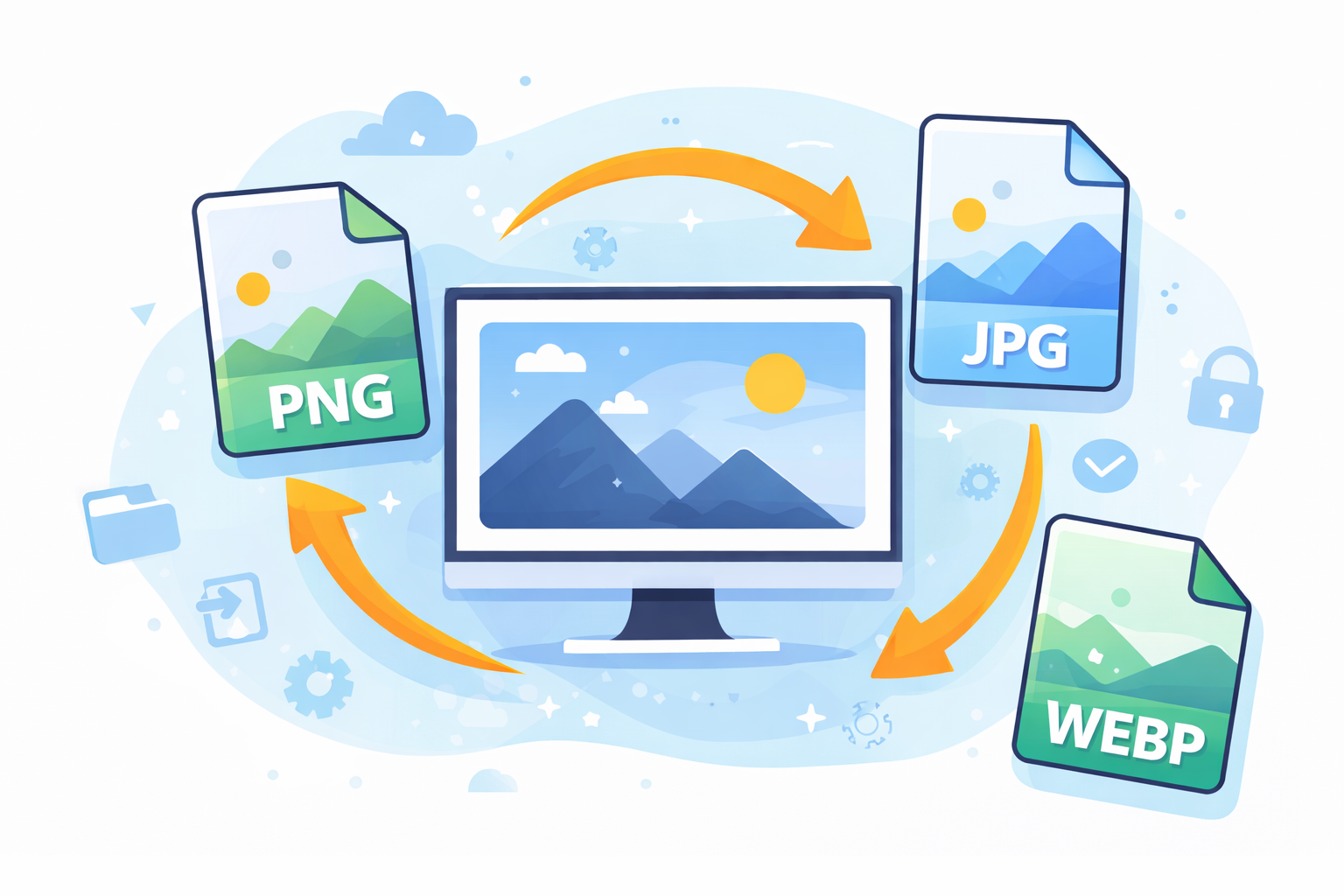
Introduction to Image File Conversion
Knowing what are the Basics of Image File Conversion is vital for anyone who works with images. No matter if you’re a blogger designer student, business owner, switching images between formats can help make sure that your images are compatible, maximize performance, and preserve the quality of your images.
Image files are available in various formats like JPEG, PNG, GIF and WebP. Each comes with its own strengths and drawbacks. Sometimes, you may need to convert a photo to decrease the size of files or improve its quality, or to make it compatible with specific applications or sites.
For instance the photographer may change RAW images into JPEG to facilitate sharing. Webmasters can convert PNG images to WebP to increase the speed of loading pages. In short it is a useful method that helps save the time of users, space and bandwidth.
In this article we will examine the way that image file conversion works and the most popular formats and the tools that are used to convert them, the errors to avoid, and the best techniques to ensure the quality of your images.
What Is Image File Conversion?
Image conversion is the process of changing images from one format of file to another format. This alters the way that the image information is stored, while preserving the visual information.
For instance:
- PNG – JPEG
- JPEG – WebP
- TIFF – PNG
- RAW – JPEG
Different formats serve different purposes. Certain formats are more focused on high-quality and others concentrate on smaller size files.
Conversion is typically used for:
- Reduces file size
- Enhancing web performance
- Making sure that devices are compatible
- Preparing images to print or editing
Without the conversion, a lot of websites and apps could struggle to display images properly.
Why Image File Conversion Is Important
Image conversion of files plays an important function in managing digital media. we explore the fascinating world of the mind—breaking down psychology concepts into simple are some reasons it’s important:
1. Compatibility Across Platforms
Different programs support different formats. Converting your image ensures that it works across all platforms.
2. File Size Optimization
Large images can slow down websites. Converting them to efficient formats like WebP can speed up loading times.
3. Improved Workflow
Developers and designers often modify files to fit the requirements of their projects.
4. Better Storage Management
Smaller files require less space in storage and are also easier to transfer.
5. Quality Control
Certain formats retain more details This is beneficial to edit and print.
Common Image File Formats Explained
Understanding file formats can help you determine which conversion is the best.
JPEG (JPG)
JPEG is among the most popular formats for digital photographs.
Advantages:
- Small size file
- Widely embraced
- Ideal for web use
Limitations:
- Uses lossy compression
- Quality declines following repeated editing
PNG
PNG is widely used for images and graphics that require transparency.
Advantages:
- Compression that is lossless
- Supports transparent backgrounds
- High-quality
Limitations:
- File size is larger compared to JPEG
GIF
GIF is widely used for simple animations.
Advantages:
- Animation support
- Small sizes of files
Limitations:
- Color range limited (256 colors)
WebP
WebP is an image format that has been modernized. format that was designed to optimize web pages.
Advantages:
- Less large file sizes are smaller than JPEG and PNG
- It supports transparency and animation.
Limitations:
- Older software may not be compatible with it.
TIFF
TIFF is mostly used for printing and professional photography.
Advantages:
- Very high-end
- Storage that is loss-free
Limitations:
- Very huge file sizes
How Image File Conversion Works
Image file conversion can alter the method of encoding used to keep the image information.
The conversion process typically includes:
- Encoding the original HTML file
- Processing the data from pixel
- Re-encoding it to an entirely new format
When converting, compression techniques can be altered.
There are two major kinds of compression:
Lossy Compression
Lossy compression decreases the size of files by removing certain image information.
Examples include:
- JPEG
- WebP (lossy mode)
This technique is excellent for web-based images, however it could decrease the quality.
Lossless Compression
Lossless compression preserves all information about the image intact.
Examples include:
- PNG
- TIFF
This method maintains quality however it results in bigger files.
Popular Tools for Image File Conversion
Many tools are able to convert images quickly and effectively.
1. Adobe Photoshop
Photoshop is extensively utilized by professionals for editing and conversion of images.
The features include:
- Export to various formats
- Advanced compression controls
- Processing in batches
2. GIMP
GIMP is a free, open-source alternative to Photoshop.
Benefits:
- Supports various formats
- Editing features that are powerful
- Works works on Windows, macOS, and Linux
3. Online Image Converters
Online tools make conversion fast and simple.
Examples include services like:
- CloudConvert
- Convertio
- TinyPNG
Upload a photo select the output format, then download the file converted.
Find out More about Online Conversion Tools here.
https://cloudconvert.com
4. ImageMagick
ImageMagick is an extremely powerful command line tool that is often utilized by developers.
It can be used to:
- Conversion of images in batch
- Automation
- Multiple formats
Step-by-Step Guide to Converting Image Files
we explore the fascinating world of the mind—breaking down psychology concepts into simple is a straightforward method of converting pictures.
Step 1: Choose the Image
Choose the image you wish to convert.
Step 2: Select a Tool
Make use of a desktop application or online converter.
Step 3: Choose Output Format
Choose the latest formats for your files (JPEG, PNG, WebP and so on. ).
Step 4: Adjust Settings
Modify resolution or compression If needed, alter resolution or compression.
Step 5: Export or Download
Save the image that was converted.
Best Practices for High-Quality Image Conversion
To preserve image quality during conversion, use these guidelines.
Use the Right Format
Make sure the format is appropriate to the goal.
Example:
- JPEG for photographs
- PNG graphics for graphic
- WebP is a web-based protocol for websites.
Avoid Repeated Conversions
Converting images repeatedly, particularly using lossy formats, decreases the quality.
Always save your original files.
Optimize Image Size
Large images can slow websites.
Resize images prior to uploading them online.
Check Compression Settings
Too much compression may cause:
- Images that are blurry
- Color distortion
- Pixelation
Make sure you balance quality and file size be sure to balance quality and file size.
Common Mistakes to Avoid
Many novices make mistakes when it comes to converting images.
1. Converting Everything to JPEG
JPEG is a popular format, however it is not ideal for graphic or images that feature transparency.
2. Ignoring Resolution
Images of low resolution can look blurred when printed or magnified.
3. Over-Compressing Images
Extreme compression damages visual quality.
4. Deleting Original Files
Always save original, high-quality copies for editing in the future.
5. Using Untrusted Online Tools
Some websites may decrease the quality or even add watermarks.
Select tools that are reliable.
Image Conversion for Websites and SEO
Image optimization is crucial for the performance of search engines.
Benefits include:
- Faster page loading
- Better user experience
- Better search results
Modern websites frequently convert images into WebP as it decreases the size of files dramatically.
Additionally:
- Use descriptive file names
- Add alt text for accessibility
- Images can be compressed without losing clarity
These actions improve SEO as well as website speed.
Batch Image Conversion for Efficiency
If you are working with a lot of pictures, batch convert can save time.
Batch processing lets you convert dozens or even hundreds of images in one go.
Tools that can support batch conversions include:
- Photoshop
- ImageMagick
- XnConvert
This feature is particularly useful for bloggers, photographers as well as e-commerce stores.
Security Considerations When Converting Images
Although the conversion of images is generally secure but keep these points in your mind:
- Beware of uploading private images to untrusted websites.
- Make sure you have permissions for your files when downloading software. Check permissions for files when downloading
- Check for malware in files when sourced from an external source
The use of trusted software decreases security threats.
Future Trends in Image File Formats
Technology continues to advance image compression.
New formats are being developed to help keep speed and quality in check.
Examples include:
- AVIF
- JPEG XL
These formats provide smaller file sizes, and high image quality.
As technology for web development advances and evolves, these formats could be more widespread.
Frequently Asked Questions
1. What is the ideal design for images on websites?
WebP is now one of the top web-based formats because it offers excellent compression and excellent quality.
2. Does converting images reduce quality?
It is dependent on the format. The lossy formats such as JPEG could lower quality, whereas PNG retains its full quality.
3. Can I convert images without installing software?
Yes. Many online converters allow users to convert and upload images right through your web browser.
4. Which format is best for transparency?
PNG is the most widely used format used for backgrounds that are transparent.
5. Is WebP better than JPEG?
In many instances there is a it is. WebP provides greater quality compression, and lower file size, while maintaining high quality images.
6. Can I convert multiple images at once?
Yes. Numerous tools can batch convert which allows users to convert multiple files at once.
Conclusion
Knowing knowing the Basics of Image File Conversion will help you manage digital images better. When you choose the correct formats, using trusted tools, and following the most effective guidelines, you will be able to maintain quality while improving performance.
Image conversion goes beyond just changing the type of file. It increases compatibility, decreases the need for storage, and improves speed on websites.
If you’re editing images or creating a website or sharing images on the web mastering the art of the art of conversion is a crucial technique that will increase in importance as the digital world evolves.