
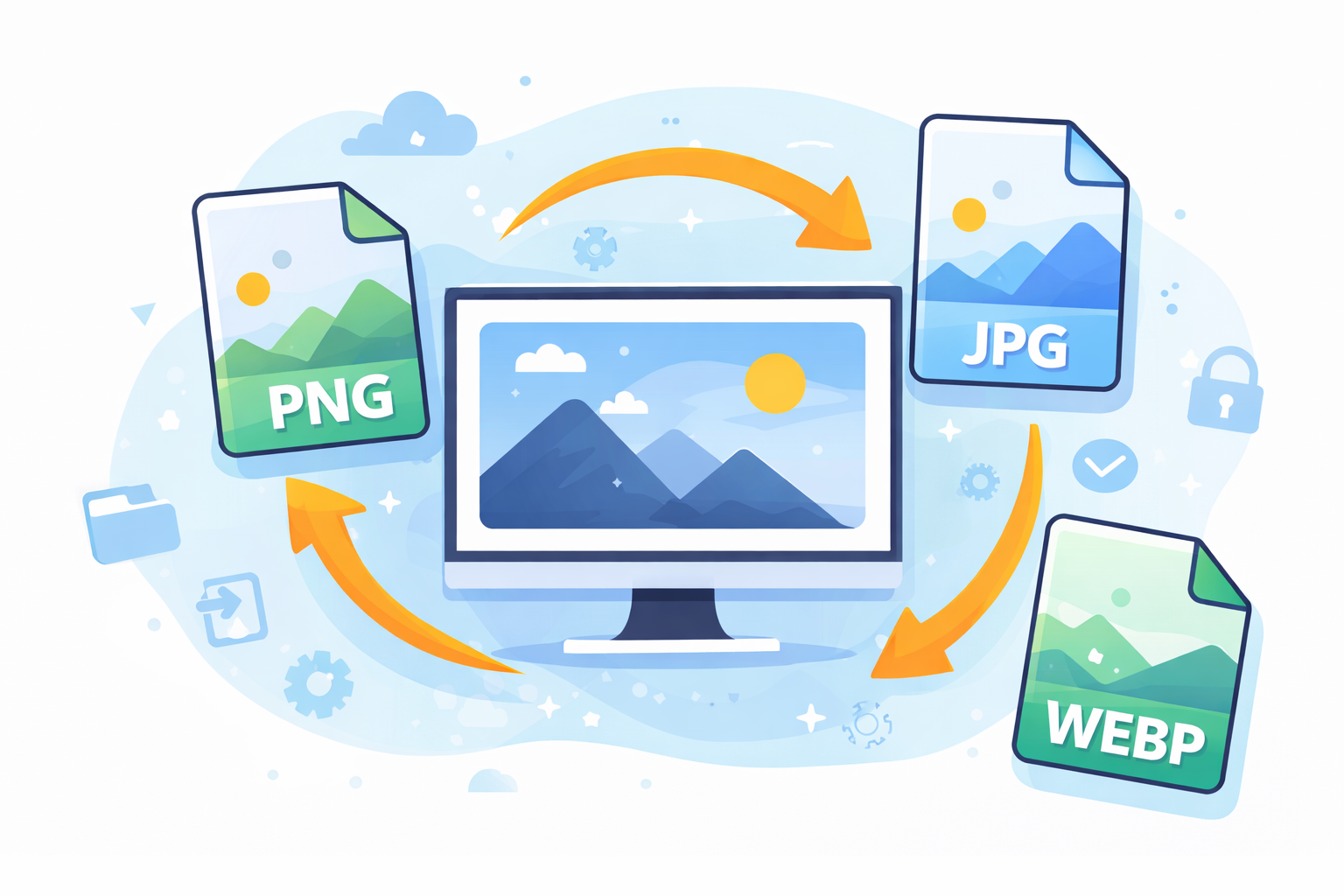
Introduction to Image Format Conversion
If you’ve tried uploading an image online only to receive an error stating that the format of the image isn’t supported then you’ve likely faced the necessity of conversion of image formats. Knowing the process of converting image Formats for beginners is a basic but crucial digital knowledge.
Images are available in various formats, including JPG, PNG, GIF, BMP, TIFF, and WebP. Each format has a distinct function. Some are best for web pages, while others are suitable for printing or editing professionally.
The positive side? Converting images is much easier than the majority of novices believe. With the proper tools and instruction, anyone can accomplish it in just a few minutes.
Through this book, be able to:
- What are the formats of images?
- You might have to change them
- The most effective tools to use
- Step-by-step methods for conversion
- Common mistakes beginners make
- Expert tips for maintaining image quality
Let’s take a dive.
Understanding Image File Formats
Before you can learn the process of converting them it’s important to know the various formats of images.
An image format simply refers to the way in which digital data will be saved and encoded. Different formats store image data in different ways.
Common Image Formats Explained
| Format | Best For | Key Features |
|---|---|---|
| JPG / JPEG | Photos & websites | Small file size Lossy compression |
| PNG | Transparency and graphics | Lossless quality, supports transparent backgrounds |
| GIF | Animations | Simple animations are supported. |
| BMP | Raw image storage | Very large size of file |
| TIFF | Professional printing | Large files, high quality and of excellent quality |
| WebP | Modern websites | Smaller, less bulky files that have high-quality |
Each format weighs file size and quality in a different manner.
Why You Might Need to Convert Image Formats
A lot of situations require the conversion of images to another format.
1. Website Compatibility
Certain websites will only accept certain formats, such as JPG and PNG. If your image is TIFF or BMP it will need change it.
2. Reducing File Size
Large images can slow websites and are more difficult to upload. Making the conversion from BMP and TIFF photos in JPG or WebP will dramatically reduce the the size of your files.
3. Maintaining Transparency
If your photo has an opaque background, then changing it to PNG will preserve the transparency.
4. Improving Web Performance
Modern formats such as WebP reduce the size of files without sacrificing quality, increasing the speed of loading websites.
5. Software Requirements
Some editing tools will only accept certain types of files.
How to Convert Image Formats for Beginners Using Online Tools
One of the easiest methods novices can convert images is to use free online converters.
These tools do not require installation, and they work right in your browser.
Step-by-Step Process
- Open an online image converter website.
- Download the file to your device.
- Select which format to output (JPG PNG, JPG, WebP, etc. ).
- Click Convert.
- Download the file that was converted.
Popular Online Image Converters
- Convertio
- CloudConvert
- FreeConvert
- Online-Convert
You can test a reliable converter here:
https://cloudconvert.com
These platforms are compatible with a myriad of formats and run both on mobile and desktop devices.
Converting Images Using Built-In Computer Tools
It is not necessary to have specific software. A lot of computers have tools to convert image formats.
Using Windows Paint
Paint is available on nearly each Windows computer.
Steps:
- The image can be opened within Paint
- Click File
- Select Save As
- Select the preferred format (JPG PNG, BMP GIF, JPG)
- Save the file
This technique is great for conversions that are quick.
Using Mac Preview
Mac users are able to easily convert images with Preview.
Steps:
- Open the image by using Preview
- Click File
- Choose Export
- Choose the new format
- Save the file
Preview supports formats such as JPEG, PNG, TIFF and PDF.
Using Image Editing Software
If you are frequently working with photos, editing software gives you greater control.
Popular Software Options
- Adobe Photoshop
- GIMP (Free)
- Affinity Photo
- Paint.NET
How Conversion Works in Editing Software
Typically, the procedure is:
- Open the image
- Click Export or Save As
- Choose the format you want to use.
- Adjust the quality settings
- Save
Advanced tools can also:
- Control of compression
- color profile management
- batch conversion
Batch Converting Multiple Images
Converting a single image at a time could be a slow process. Batch conversion lets you convert hundreds or even dozens of files in one go.
Tools That Support Batch Conversion
- IrfanView
- XnConvert
- Adobe Photoshop
- ImageMagick
Benefits of Batch Conversion
- Time-saving
- Maintains file names organized
- Great for photographers and bloggers.
- Optimized for image optimization on websites
Choosing the Right Image Format
The choice of the right format is as crucial as changing it.
Best Formats for Different Purposes
| Purpose | Best Format |
|---|---|
| Photos of the Website | JPG |
| Logos & graphics | PNG |
| Images animated | GIF |
| Prints of high-quality | TIFF |
| Fast sites | WebP |
Knowing these distinctions can help you stay clear of unnecessary conversions.
Maintaining Image Quality During Conversion
One of the concerns that newbies face is the loss of image quality.
Tips to Preserve Quality
- Beware of converting the same image
- Make use of format lossless as often as possible.
- Make backup copies of the original files
- Set compression settings with care.
- Export with the right resolution
As an example, converting JPG to PNG won’t restore quality since JPG compression is indefinite.
Common Mistakes Beginners Make
While learning how to convert image Formats for beginners People often make mistakes that are avoidable.
1. Repeated Conversions
Every time you convert from a lossy format such as JPG decreases the quality.
2. Using the Wrong Format
The choice of BMP to upload web-based images produces excessively huge files.
3. Ignoring Transparency
The conversion of PNG into JPG will remove transparent background.
4. Forgetting Image Dimensions
Conversion does not automatically resize images.
5. Over-Compressing Images
The excessive compression creates visible artifacts.
Best Free Tools for Image Conversion
overcoming stress are some tools for beginners.
Online Tools
| Tool | Best Feature |
|---|---|
| CloudConvert | Supports over 200 formats |
| Convertio | Drag-and-drop interface that is easy to use |
| FreeConvert | Large file size limits for files |
Offline Tools
| Software | Platform |
|---|---|
| GIMP | Windows, Mac, Linux |
| IrfanView | Windows |
| XnConvert | Cross-platform |
Offline tools are great for large files as well as batch conversions.
How to Convert Images for Websites
Optimization of websites is among the main reasons behind conversion of images to different formats.
Recommended Workflow
- Resize the image before you do this.
- Convert to JPG or WebP
- Compress the file
- Upload your site to the uploader
Benefits include:
- Faster page loading
- Increased SEO performance
- Better user experience
Security and Privacy Considerations
When using online converters it is important to consider privacy.
Best Practices
- Beware of uploading images that are sensitive
- Make sure to use trusted websites
- Make sure to delete the converted files If you are able to do so
- Use offline tools to protect confidential content
Most reliable platforms will automatically erase uploaded files within a matter of hours.
FAQs About How to Convert Image Formats for Beginners
1. What is the most efficient method of converting image formats?
The simplest method is to use an online convertor. You can upload your image. select an option for the format, and then download the file converted.
2. Does converting an image reduce quality?
It’s dependent upon the type of format. Converting to JPG could reduce the quality due to compression, but PNG maintains high quality.
3. Can I convert images on my phone?
Yes. Numerous mobile apps and browser tools permit image conversion directly via smartphones.
4. What format is best for websites?
JPG along with WebP is the two most commonly used formats due to their smaller file sizes and excellent quality.
5. Is PNG better than JPG?
PNG offers better quality and transparency however, they are also larger than JPG.
6. Are online image converters safe?
Most trusted converters are safe. But beware of uploading private photos to untrusted websites.
Conclusion
The process of learning How to Convert Images formats for beginners is an essential digital ability that helps you handle, share and improve the quality of images. When you upload images on a website, sharing images via email, or creating images for printing, selecting the right format makes huge differences.
The good news is that image conversion doesn’t require any advanced technical skills. With computer tools built-in such as free software or simple online converters, novices can convert images quickly in the file formats that they require.
Make sure you select the appropriate format to suit your needs ensure image quality throughout the conversion process, and avoid common errors made by beginners. After some practice, the process of converting images formats is an easy and easy task that enhances your workflow in digital.