
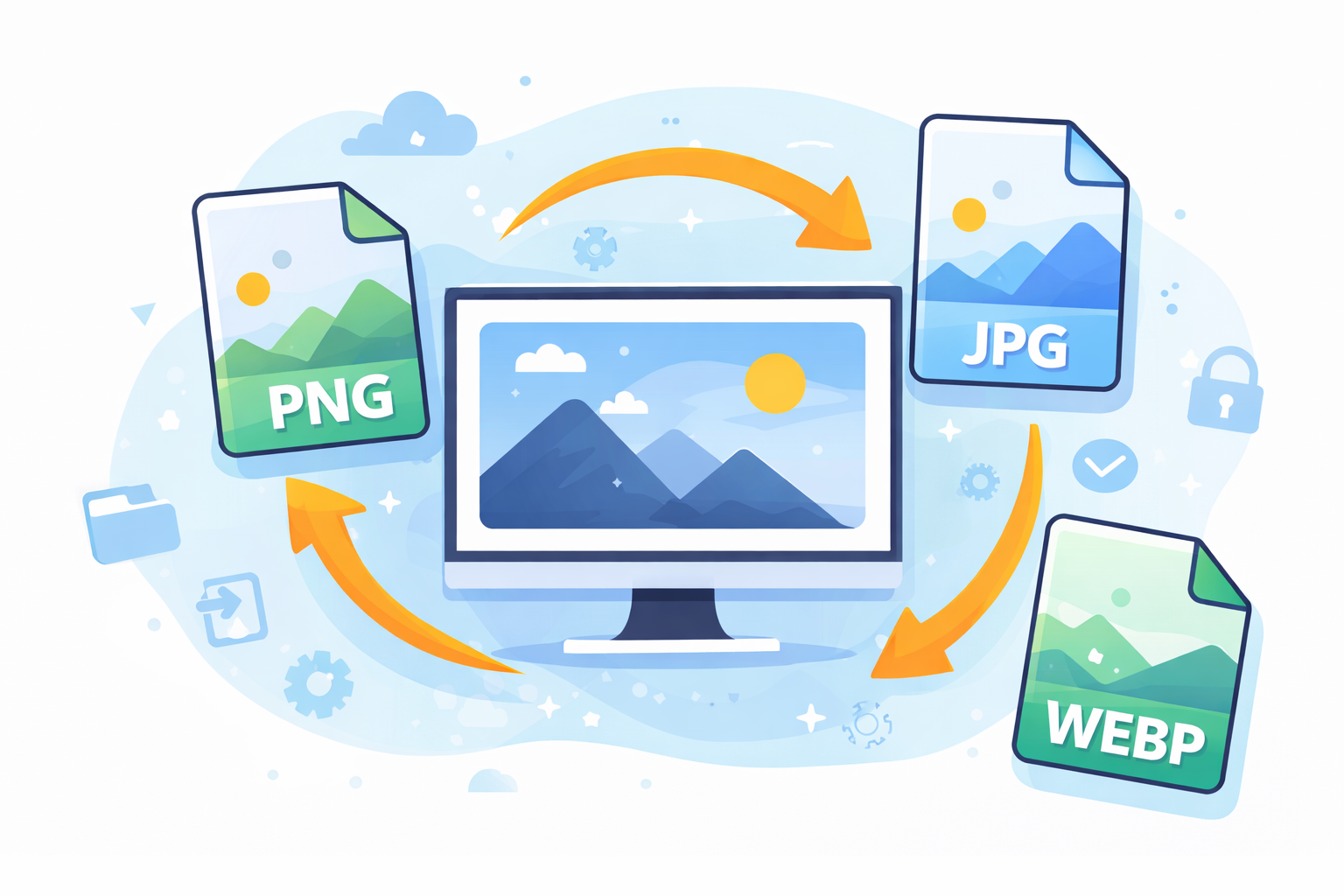
Introduction: Why Image Optimization Matters for Websites
Modern websites are heavily dependent on images for content. Images help make pages look more attractive as well as engaging and easy to comprehend. However, too large or poorly optimized images could make websites slow to load significantly. Pages that load slowly frustrate visitors and increase bounce rates and can hurt the rankings of search engines.
Knowing how to convert images to increase website performance is among the most effective methods to increase the speed of your website and improve user experience. Optimized images load quicker use less bandwidth while maintaining high-quality visual quality.
The results of studies show that images usually comprise over 50% of the page’s entire size. If not optimized any well-designed website may be unresponsive and slow.
In this complete guide, you’ll discover:
- The importance of image conversion
- The most suitable photo formats to use for Web performance.
- Tools and techniques for optimizing images
- Common errors to avoid
- Best practices utilized by SEO experts
At the end of this article you’ll have a clear method to boost your site’s performance by implementing intelligent image optimization.
Understanding Website Performance and Image Impact
Performance of a website is the speed at which a page is loaded and usable. Speed plays a significant part in:
- Rankings of search engines
- User satisfaction
- Conversion rates
- Mobile usability
Images can significantly impact loading speed since they’re often the biggest images on a website.
How Images Affect Loading Speed
If a user visits an online page it must download all elements, comprising:
- HTML files
- CSS stylesheets
- JavaScript files
- Images
Images with large sizes increase the amount of data required to be downloaded. This can slow down rendering of the page and can cause delays in users’ interaction.
For instance:
| Image Type | File Size | Page Impact |
|---|---|---|
| Uncompressed PNG | 2 MB | Very Slow |
| Optimized JPEG | 300 KB | Fast |
| WebP | 120 KB | Very Fast |
Image conversion is a powerful method of reducing the size of files while keeping the quality unaffected.
What Does Image Conversion Mean?
Image conversion is the process of changing the format of an image size, size or the compression level to ensure it is suitable for the internet.
This could include:
- Converting PNG to WebP
- Compressing huge JPEG files
- Resize images that are too large
- Eliminating unnecessary metadata
The aim is simple: reduce file size, without decreasing the quality of your images.
Common Image Conversion Techniques
- Conversion of formats (PNG WebP)
- Lossy compression
- Compression that is lossless
- Image resizing
- Removal of metadata
Each method plays an important role in increasing the speed of websites.
Best Image Formats for Web Performance
The choice of the correct format is essential when studying how to convert images for better website performance.
JPEG (JPG)
Ideal for:
- Photographs
- Complex images
- Blog images
Advantages:
- Small size file
- Good compression
- Widely appreciated
Disadvantages:
- Lossy compression may reduce quality.
PNG
Ideal for:
- Graphics
- Logos
- Images that require transparency
Advantages:
- High image quality
- Compression that is lossless
Disadvantages:
- Larger file sizes.
WebP
WebP is among the most modern formats used for websites..
Advantages:
- As much as 30-40 percent smaller than JPEG
- Helps to promote Transparency
- Excellent compression
Most modern browsers support WebP.
AVIF
AVIF is a brand new format that offers smaller files as compared to WebP.
Advantages:
- Superior compression
- Excellent quality
Disadvantages:
- There is a limited support for older browsers.
Steps on How to Convert Images for Better Website Performance
Optimizing images isn’t difficult If you follow a well-organized procedure.
Step 1: Choose the Correct Format
Make sure you use the correct format for every type of image.
Example:
- Photos – JPEG or WebP
- Logos – PNG or SVG
- Graphics – WebP
Selecting the correct format right away reduces the size of files.
Step 2: Resize Images Before Uploading
A lot of websites download images straight from camera or design tools. They could be large or wide by 4000 pixels that aren’t needed for use on the web.
Sizes that are recommended:
- Blog images: 1200px width
- Thumbnails: 300-600px
- Background images Maximum resolution 1920px
The reduction in the file size.
Step 3: Compress Images
Compression eliminates data that is not needed from images.
There are two types of:
Lossy Compression
- Reduces file size dramatically
- Slight quality reduction
Lossless Compression
- Maintains original quality
- Smaller file reduction
Both methods improve loading speed.
Step 4: Convert Images to WebP
WebP generally reduces the size of files by 25-45 percent in comparison to other formats.
Benefits:
- Faster page loading
- Lower server bandwidth usage
- Scores for SEO have improved
A number of CMS platforms automatically allow WebP conversion.
Step 5: Enable Lazy Loading
Lazy loading delay loading images till the viewer scrolls down to them.
Benefits include:
- Speedier initial page load
- Server requests are reduced
- Mobile performance has been improved
Modern browsers can support lazy loading. It is a feature:
loading="lazy" Best Tools for Image Conversion and Optimization
A variety of tools can assist in automating the process of enhancing images.
Online Image Optimization Tools
The most popular online tools are:
- TinyPNG
- Squoosh
- ImageOptim
- Compressor.io
These tools let you compress files quickly without the need to install software.
A powerful browser-based optimizer may be located here:
https://squoosh.app/
WordPress Image Optimization Plugins
If you manage a WordPress website, plugins allow you to optimize your site in a snap.
Top plugins:
- ShortPixel
- Imagify
- Smush
- Optimole
The plugins compress the images automatically when they upload.
Desktop Software for Bulk Image Conversion
For libraries with large images, desktop software is more effective.
Examples:
- Photoshop Export for Web
- GIMP
- XnConvert
These tools permit batch processing as well as format conversion.
Common Image Optimization Mistakes
A lot of website owners intentionally harm performance through poor image management practices.
Uploading Images Without Compression
It is the single most frequent error. Images that are large slow websites significantly.
Always compress your images prior to uploading.
Using PNG for All Images
PNG files tend to be more large in size than JPEG as well as WebP. Only use PNG when transparency is necessary.
Ignoring Responsive Images
Modern websites should offer various sizes of images for various devices.
Receptive images can help:
- Mobile performance
- Bandwidth use
- User experience
Not Using a CDN
The Content Delivery Network (CDN) is a way to distribute images across the globe, which reduces the time it takes for users to load images in various regions.
SEO Benefits of Image Optimization
Search engines view page speed as to be a crucial ranking factor. Optimized images directly contribute to faster websites.
Benefits include:
- Improved Core Web Vitals
- Better search rankings
- Lower bounce rates
- Higher engagement
Furthermore, optimized images enable crawlers to search for content with visuals more efficiently.
The most important SEO practices are:
- Descriptive filenames
- Alt text to aid accessibility
- Proper image dimensions
Advanced Image Optimization Techniques
Modern optimization methods can improve performance even higher.
Responsive Images (srcset)
Responsive images let browsers load different sizes of images according to size of the screen.
Example:
This will ensure that mobile users don’t download large images.
Image CDN Optimization
Certain CDNs automatically optimize images.
The features include:
- Real-time compression
- Automatic format conversion
- Resizing using a device
The most popular solutions are Cloudflare Images Optimization.
Metadata Removal
Images often contain hidden metadata like:
- Camera settings
- GPS coordinates
- Information about the author
The removal of metadata can reduce the size of files.
FAQs About How to Convert Images for Better Website Performance
1. What is the most effective image format for web performance?
WebP is usually the most popular format as it provides great compression, with excellent image quality. It dramatically reduces the size of files when compared the formats JPEG as well as PNG.
2. How much should images be compressed?
Many images can be compressed to 60-80% with no noticeable quality degradation. The ideal compression level will depend on the kind of image being used and the application for it.
3. Does image optimization affect SEO?
Yes. Speedier loading pages boost the search engine rankings, user experience as well as Core Web Vitals every one of them vital SEO elements.
4. Can I convert existing images on my website?
Yes. Many plugins and tools permit the bulk conversion of images to more optimized formats, such as WebP.
5. Should I use WebP or AVIF?
WebP is the current safest choice because of its wide support for browsers. AVIF is a better compression option, however it isn’t yet supported by all browsers.
6. What is the ideal image size for websites?
The majority of website images are between between 100KB to 300KB to achieve maximum performance.
Conclusion
Understanding how to convert images to increase website performance is vital for anyone who manages a modern-day website. Images are usually the most significant element on a website and if they are not optimized properly, they can slow the loading speed of a page significantly.
Utilizing the techniques that are discussed in this guide — such as selecting the best image format as well as compressing images by resizing them, permitting lazy loading and using the latest formats such as WebP, you can dramatically improve the speed of websites as well as overall efficiency.
Optimized images don’t just enhance the user experience, but they also improve search engine rankings, ease load on servers, and boost mobile browsing. If you’re running a blog or an online store or a corporate site, optimizing images is a must in your strategy for improving the performance of your website.
Implement these strategies today and you’ll notice faster pages as well as happier users and better search engine visibility.